
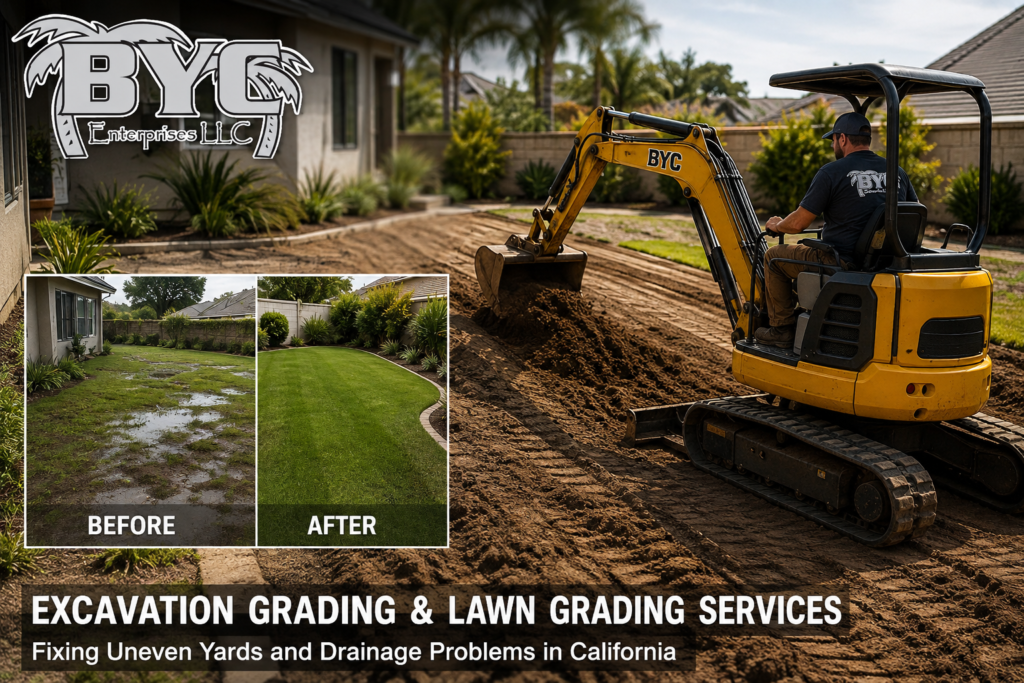
After a storm, standing water, soggy grass, or soil erosion can signal a grading problem. Excavation grading helps correct slopes and improve drainage. BYC Landscaping evaluates and prepares the ground properly before new landscaping, helping create a healthier, more functional yard.
What Is Excavation Grading?
Excavation grading reshapes land by moving and leveling soil to create a stable, properly sloped surface. It improves drainage, removes low spots, and helps prevent erosion and settling.
Excavation removes soil or debris, while grading redistributes material to create the desired slope. Rough grading establishes the basic shape, while fine grading prepares the surface for lawns, landscaping, or hardscaping.
A properly graded yard is not completely flat; it has a gentle slope that directs water away from the foundation toward a suitable drainage area. Compaction then helps the soil maintain its shape over time.
Why Proper Grading Matters for California Properties
California’s varied terrain and soil conditions make proper grading essential. Clay soils can hold water, while sloped areas may face runoff and erosion. Poor grading can lead to standing water, foundation concerns, and unhealthy lawns. Proper excavation grading creates the right slope, improves drainage, and prepares stable ground for lawns, patios, walkways, and other landscaping.
Signs Your Yard May Need Lawn Grading
- Standing water that lingers a day or more after rain or irrigation
- Water collecting near the foundation, garage, or patio
- Uneven or sunken sections of lawn
- Visible soil erosion, especially on slopes
- Muddy or soggy patches that never fully dry
- Patchy, thin, or dying grass in specific spots (often drainage, not just lawn care)
- Runoff flowing toward the house instead of away from it
- Trouble getting a level base for a new patio, walkway, or garden bed
How Lawn Grading Services Near Me Can Improve a Yard
When homeowners search for lawn grading services near me, it’s usually because something concrete has stopped working, water won’t drain, the lawn looks uneven, or a project stalled because the ground isn’t level. A local contractor like BYC Landscaping brings something a generic search result can’t: firsthand familiarity with the soil types, drainage patterns, and slope challenges specific to California neighborhoods.
That local context shapes the grading plan where soil needs to move, how steep a slope can safely be, and which direction water should ultimately flow. It also helps catch problems a homeowner might miss, like a slope draining away from the house but funneling water toward a neighbor’s fence, or a low spot quietly compacting soil under the lawn for years.
Lawn Grading vs. Lawn Regrading: What’s the Difference?
| Lawn Grading | Lawn Regrading | |
| What it is | Establishing slope and drainage on new or unshaped ground | Correcting the slope of an existing, already-graded yard |
| Typical trigger | New construction, bare lots, major renovations | Standing water, erosion, or a slope that’s stopped working |
| Best for | Preparing ground before sod, seed, or hardscaping | Older yards or ones altered by past landscaping changes |
What Does the Excavation Grading Process Look Like?
- Site inspection: assessing existing slope, soil, and problem areas
- Drainage assessment: mapping current versus ideal water flow
- Grading plan: setting target slope and drainage direction
- Soil removal or redistribution: moving material from high points to low points
- Excavation and reshaping: cutting and filling new contours
- Soil compaction: locking in the reshaped ground
- Final grading: smoothing the surface to the correct pitch
- Inspection and prep: confirming the grade before sod or hardscaping
Can Excavation Grading Help With Drainage Problems?
California’s varied terrain and soil conditions make proper grading especially important. Clay soils can hold water, while sloped areas may experience runoff and erosion. Poor grading can lead to standing water, soil loss, and drainage problems. Excavation grading helps create the right slope, improve water flow, and prepare stable ground for lawns, landscaping, patios, and walkways.
When Should You Hire a Professional Grading Contractor?
- Significant slopes or elevation changes on the property
- Ongoing or worsening drainage problems
- Large volumes of soil movement
- New landscape construction on bare or undeveloped ground
- Hardscape preparation — patios, walkways, retaining walls
- Property renovations touching multiple areas of the yard
- Persistent standing water that hasn’t responded to smaller fixes
Why Choose BYC Landscaping for Excavation Grading in California?
BYC Landscaping treats grading as groundwork, the part of a project that determines whether everything built afterward holds up. Every job starts with an on-site evaluation of slope, soil, and drainage rather than a generic quote, because no two California properties behave quite the same way. BYC Landscaping works with grading equipment suited to both small residential corrections and larger regrades, planning each project around the yard’s specific drainage needs instead of a fixed template.
Conclusion
Whether it’s a puddle that won’t drain, a lawn sloping the wrong way, or soil washing out after every storm, most of these problems trace back to how the land was originally shaped. Excavation grading addresses that root cause directly, giving a yard the stable, properly sloped foundation it needs for healthy grass, functional drainage, and whatever landscaping comes next. For California properties, where soil and terrain shift from one neighborhood to the next, a site-specific grading plan matters more than a generic fix, which is how BYC Landscaping approaches every property it evaluates. If your yard has been fighting drainage or leveling issues, it’s worth having the ground itself checked first.
Frequently Asked Questions
What is excavation grading?
Removing, adding, or redistributing soil to reshape land into a stable, sloped surface that directs water away from structures.
How do I know if my lawn needs grading?
Standing water after rain, sunken areas, erosion, muddy patches, and runoff moving toward the house are the most common indicators.
Can lawn grading fix standing water?
Often, yes, especially when incorrect slope is the cause. Compacted soil or limited drainage may require grading plus additional measures.
What’s the difference between grading and regrading?
Grading shapes new ground; regrading corrects an existing lawn’s slope after drainage or erosion problems develop.
How long does lawn grading take?
It depends on property size, the extent of correction needed, and site access. A contractor can give a timeline after an on-site evaluation.