
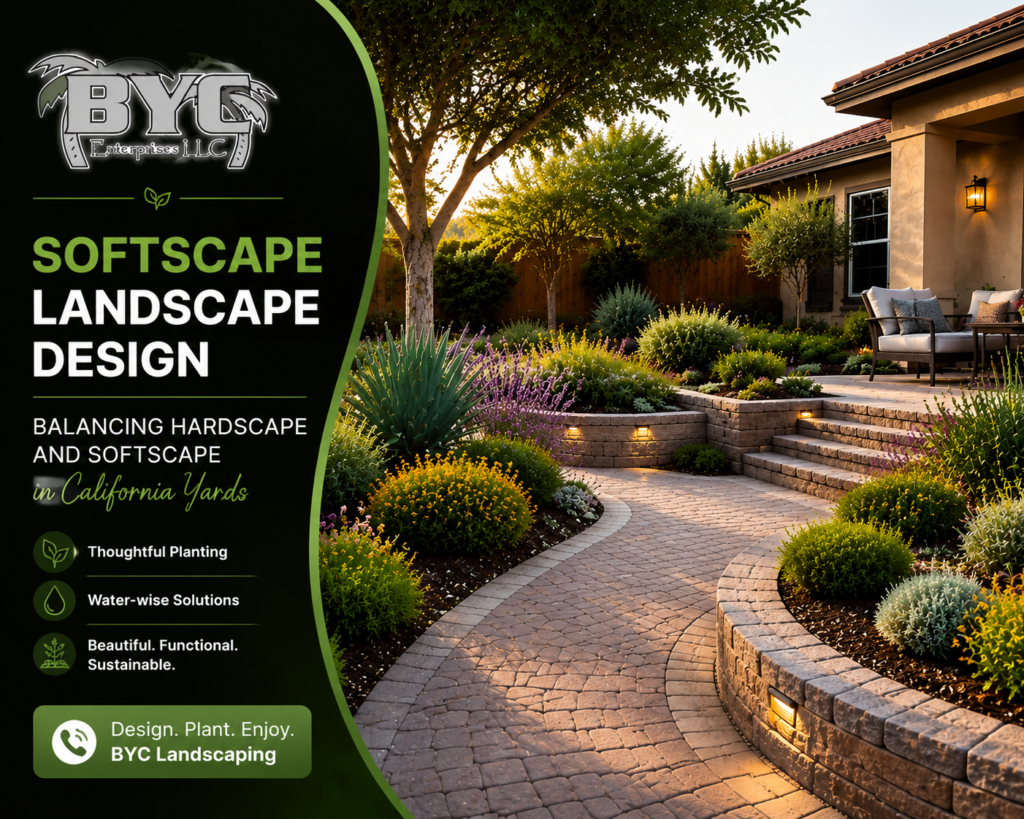
Walk through a California neighborhood, and you may see patios, lawns, and plants added at different times, leaving the yard feeling unfinished. Softscape landscape design brings these elements together, helping plants, lawns, and planting beds complement patios, walkways, and other hardscape features. In California, where climates vary from coastal areas to dry inland regions, thoughtful hardscape and softscape planning can create a landscape that looks natural, functions well, and suits the local environment.
What Is Softscape Landscape Design?
Softscape refers to the living, growing parts of a landscape as opposed to the built, non-living parts. It typically includes:
- Lawns and turf areas
- Trees
- Shrubs
- Flowers and flower beds
- Groundcovers
- Ornamental plants
- Mulch, soil, and planting beds
Softscape landscape design is the process of deciding which of these elements go where, and why. It’s not just picking plants that look good at the nursery. It’s thinking through sun exposure, mature size, water needs, soil condition, and how each plant will look next to the one beside it in year one and in year five.
Hardscape vs. Softscape: What’s the Difference?
Hardscape is the non-living, constructed part of a landscape:
- Patios
- Walkways
- Retaining walls
- Driveways
- Outdoor seating areas
- Other built structures
Softscape is the living part:
- Plants, trees, and shrubs
- Grass and turf
- Flower beds
- Groundcovers
Why Hardscape and Softscape Need to Work Together
When these two elements are designed together instead of added separately, a few things tend to happen:
- Pathways get lined with plants instead of just dropped into open dirt
- Patios feel enclosed and comfortable instead of exposed
- Retaining walls get softened with shrubs or trailing groundcovers instead of sitting bare
- The eye has a clear path to follow through the yard
- Curb appeal improves because the front of the house reads as one composed space
Softscape Design Considerations for California Yards
Climate and sun exposure. A coastal yard with mild summers and marine fog behaves very differently from an inland valley yard that regularly hits triple digits. Full-sun exposure on a south-facing slope also changes what will and won’t survive.
Soil conditions. Heavy clay, sandy soil, and decomposed granite all drain and hold nutrients differently. Soil that isn’t amended properly can undermine even the right plant choice.
Drainage. California’s rain pattern long dry stretches followed by heavier winter storms — means a yard needs a plan for where water goes when it does rain, not just how it’s irrigated the rest of the year.
Water availability and irrigation efficiency. Drip irrigation and zoned watering (grouping plants with similar water needs together) make a real difference in both plant health and water bills.
Seasonal changes and long-term growth. A plant that looks proportional at installation can outgrow its space within a few years if mature size wasn’t factored in from the start.
None of this means every California yard should look the same. It means the design should respond to the specific site, not a generic plant list.
Popular Softscape Elements for California Yards
A few categories come up often in California softscape planning, each solving a different problem:
- Drought-tolerant and native plants reduce irrigation demand and tend to be better adapted to long dry seasons, though suitability still depends on the specific microclimate.
- Shade trees cut down on afternoon heat near patios and windows and give a yard a sense of maturity over time.
- Privacy shrubs create screening between properties or along a fence line without the cost of a full structure.
- Seasonal flower beds add color that shifts through the year, often placed near entries or patios where they’ll actually be seen.
- Groundcovers fill in bare soil, reduce erosion on slopes, and cut down on weeding.
- Lawn or turf areas, used selectively where there’s an actual functional need — play space, pets, entertaining rather than as default coverage for the whole yard.
- Mulch and soil improvements, which help retain moisture and protect roots, particularly during dry summer stretches.
How to Create a Balanced Hardscape and Softscape Design
A workable process, roughly in order:
- Start with how the yard will be used. Entertaining, kids, pets, gardening, or simply low-maintenance curb appeal all lead to different layouts.
- Plan pathways and activity areas first. These define the hardscape footprint before softscape fills in around it.
- Define planting zones based on sun, water needs, and visibility from the house or street.
- Choose plants based on actual site conditions, not just appearance at the nursery.
- Account for mature plant size, especially near walkways, patios, and windows where overgrowth becomes a problem later.
- Plan irrigation and drainage before, not after, planting; moving a sprinkler line after installation is a lot more disruptive.
- Create smooth transitions between hardscape edges and planting beds instead of a hard, abrupt line.
- Factor in maintenance realistically: how much time or budget will actually go toward upkeep matters as much as the initial design.
When Should You Hire a Professional Landscape Designer?
- An honest site evaluation: soil, drainage, sun exposure, existing conditions
- Plant selection matched to the specific microclimate, not general advice
- A layout that accounts for both hardscape and softscape from the start
- Irrigation and drainage planning built into the design, not added after
- Realistic maintenance expectations going in
Softscape Landscape Design by BYC Landscaping
BYC Landscaping provides softscape landscaping services in California, helping homeowners plan plant selection, planting layouts, and the connection between softscape and hardscape. Each design is based on the property’s climate, soil, sunlight, and intended use rather than a one-size-fits-all approach. When patios, walkways, or retaining walls are involved, softscape and hardscape are planned together for a cohesive outdoor space. Planning a landscape update? Contact BYC Landscaping to discuss your goals.
Final Thoughts
A California yard often feels incomplete when hardscape and softscape are planned separately. When plant selection, layout, irrigation, and hardscape work are considered together, the result is a balanced landscape that looks better and lasts longer. If you’re planning a new landscape or updating an existing one, BYC Landscaping can help with the softscape and overall design.
Frequently Asked Questions
What is softscape landscape design?
Softscape landscape design plans living elements such as plants, lawns, trees, shrubs, and planting beds based on sunlight, soil, water, and site use.
What is the difference between hardscape and softscape?
Hardscape includes built features like patios, walkways, and retaining walls, while softscape includes plants, lawns, trees, and flower beds. Good landscaping combines both.
What are common softscape elements?
Common elements include lawns, trees, shrubs, flowers, groundcovers, ornamental plants, mulch, and planting beds.
Is softscape landscaping suitable for California’s climate?
Yes, when the design considers the local climate, soil, sunlight, drainage, and water conditions.
How do you combine hardscape and softscape?
Plan patios, walkways, and other structures alongside planting areas to create smooth transitions and a balanced overall landscape.